
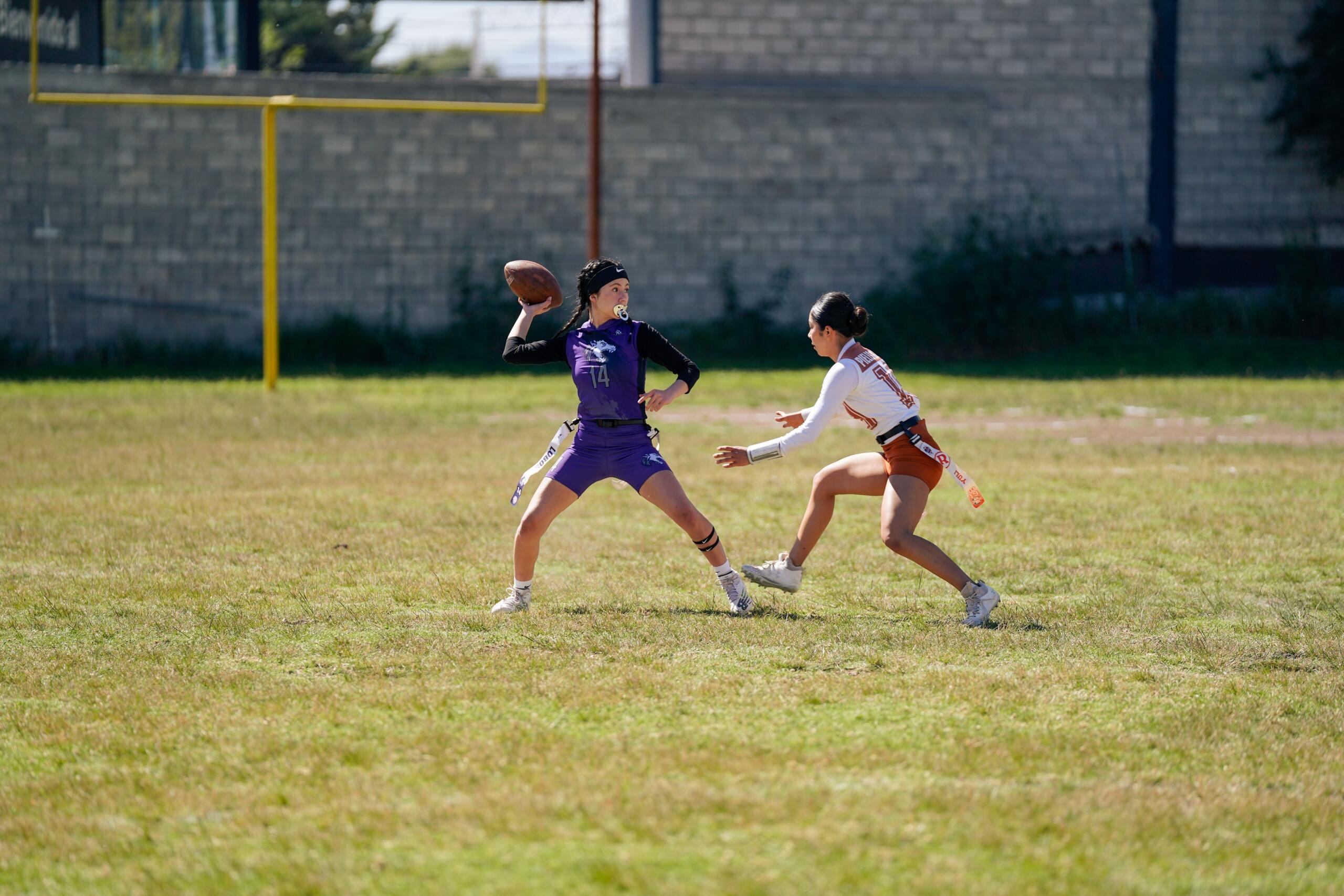

Flag football rewards preparation just as much as athletic ability. While speed and accurate passing help, teams that understand formations and execute plays with confidence usually have the advantage. Every player has a role, from creating space for a receiver to closing down passing lanes on defense. Unlike tackle football, flag football moves quickly. There is less time to recover from mistakes, so communication and timing become essential. The best teams know where everyone should line up before the ball is snapped and how each route or defensive assignment fits into the wider game plan. Whether you're coaching a youth league, organizing weekend games with friends, or competing in a local tournament, learning a handful of reliable plays can transform the way your team performs. Instead of relying on individual talent, you'll have a structured approach that creates opportunities on every drive. What are the best flag football plays? Let's discover them in this article!
Every athlete knows the feeling of chasing something bigger than themselves, whether it’s a dream, a goal, or the next level.
Jayden Daniels, NFL quarterback


Essential Flag Football Formations
Are you curious to read on easy flag football plays? Before learning specific plays, it's worth understanding the formations that make them work. A formation determines where every player lines up before the snap. From there, routes, handoffs, and defensive coverage all develop naturally. A team that understands its formations can adapt to different opponents without changing the entire playbook.
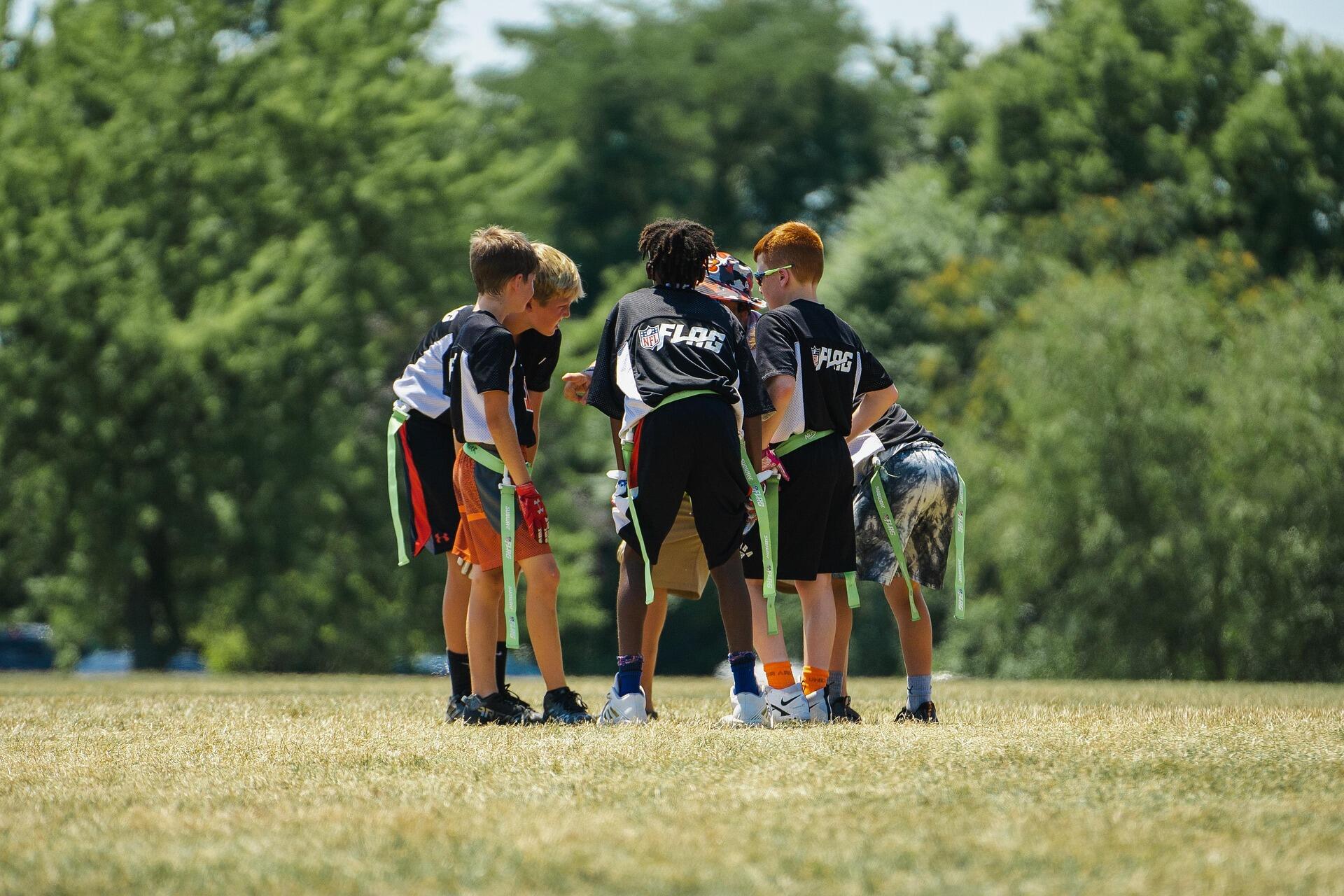
Common Offensive Formations
Every offensive formation has strengths. Some create room for deep passes, while others help short, quick throws become reliable gains. Teams choose formations based on their players’ strengths and how the defence is set up. Changing formations during a game can also make it harder for defenders to predict the next play.
Spread Formation
The spread formation is one of the most common setups in 7v7 flag football. Receivers line up across the width of the field, forcing defenders to cover more ground. With defenders stretched from sideline to sideline, the quarterback has several passing options immediately after the snap. Quick slants, hitch routes, and crossing patterns all become easier because defenders cannot crowd the middle of the field. This formation also makes it harder for defenses to disguise blitzes since players are spread across the formation.
Spread Formation forces defenders to cover more space, opening opportunities for slants, hitches, and crossing routes.
Trips Formation
Trips places three receivers on one side of the field and one on the opposite side. This alignment creates mismatches. Defenders may struggle to decide who covers each receiver, especially if routes cross or overlap. The quarterback can read the defense before the snap and quickly identify whether the defense has committed extra players to the strong side. If defenders shift too far toward the trips side, the isolated receiver often gains valuable one-on-one coverage.
Curious to find out about all of the flag football positions?
Bunch Formation
In a bunch formation, three receivers begin close together before separating into different routes. Because defenders start close to one another as well, the formation naturally creates traffic that makes man coverage difficult. Receivers can break in different directions immediately after the snap, often giving one player enough separation for an easy completion. Timing is particularly important here. If receivers hesitate or drift too close together, the play can lose its effectiveness.
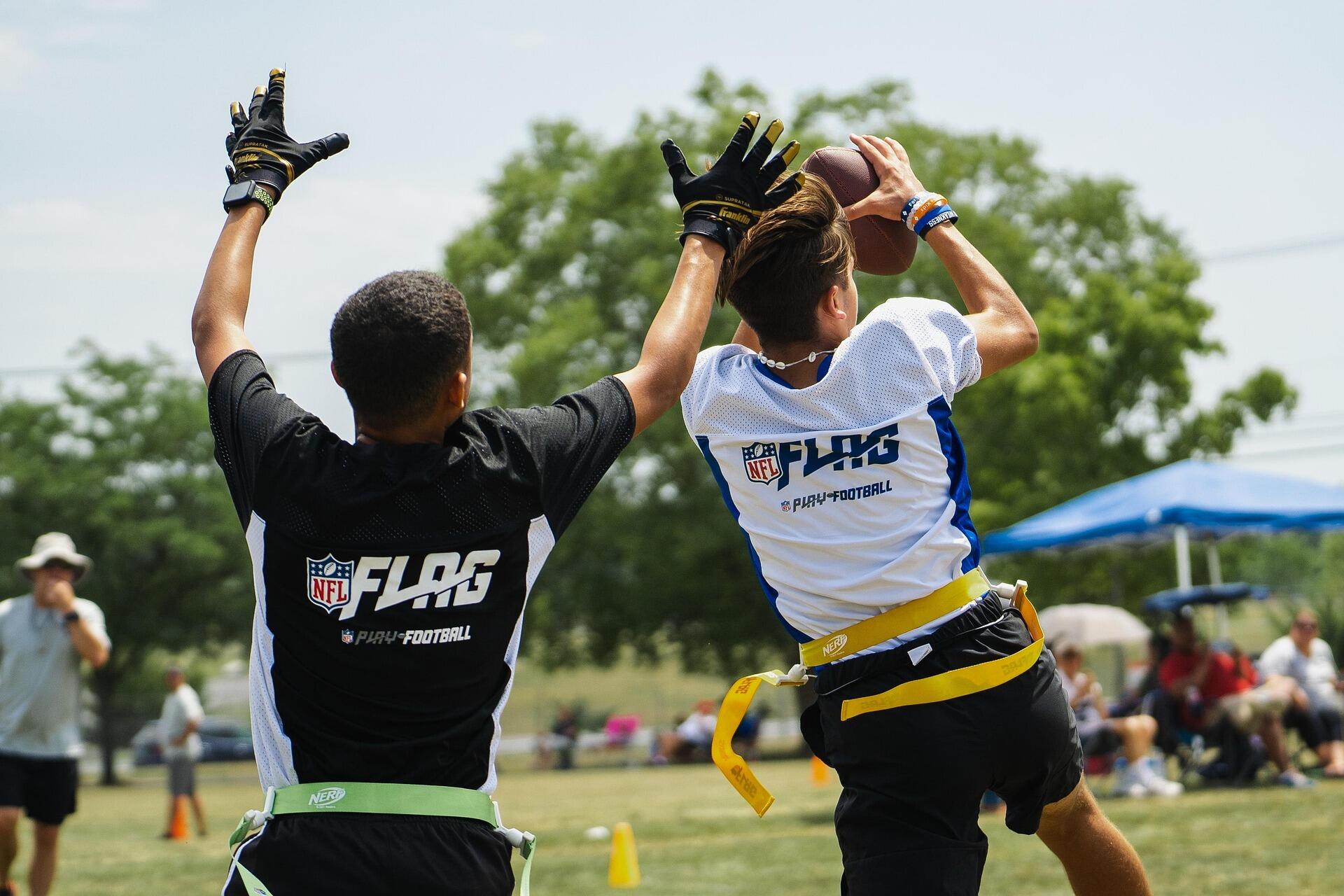
Balanced Formation
A balanced formation distributes receivers evenly across both sides of the offense. While it may appear less aggressive than trips or spread, it gives the quarterback flexibility. The offense can attack whichever side presents the better matchup without making the defense guess which direction the play is heading. Balanced formations are especially useful for younger teams learning route concepts because players develop an understanding of spacing without relying on complex motion.
What’s your favorite flag football play or formation?
Defensive Formations
Good defenses rarely depend on one system throughout an entire game. Instead, they adjust according to field position, down, distance, and the strengths of the opposing offense. Knowing a few defensive formations helps players react quickly without confusion.
Zone Defense
Zone coverage assigns defenders to areas rather than individual receivers. Instead of chasing one player across the field, defenders watch the quarterback while protecting their assigned section. This approach limits deep completions and encourages offenses to settle for shorter passes. Zone defenses work particularly well against teams that rely on crossing routes or receivers constantly switching positions. Communication remains essential. As receivers move between zones, defenders must pass them off smoothly to avoid leaving open space.
Man-to-Man Coverage
In man coverage, each defender follows one offensive player throughout the play. This aggressive style works well when defenders have the speed to stay with their assignments. It also allows defensive backs to challenge receivers more directly at the break point of routes. The downside is that a single missed assignment can quickly lead to a long gain. Receivers who create separation with sharp cuts often expose weaknesses in man coverage.
Blitz Packages
Although quarterbacks usually release the ball quickly in flag football, a well-timed blitz can still disrupt an offense. Rather than sending extra rushers every play, successful teams use blitzes selectively. A surprise rusher may force the quarterback into an early throw before receivers complete their routes. Blitzing carries risk, however. Every defender committed to the pass rush leaves one fewer player in coverage, making disciplined execution essential. No matter which defensive formation a team chooses, success comes from teamwork rather than individual effort. Defenders who communicate before the snap and adjust together after the play begins consistently outperform groups relying on athleticism alone.
Cover Two
Cover Two divides the deep field between two safeties while the remaining defenders protect underneath routes. This setup reduces the likelihood of deep touchdown passes and forces offenses to work methodically down the field. Quarterbacks often look for openings between the safeties and underneath defenders, so linebackers and cornerbacks must maintain disciplined positioning throughout each play.
Are you ready for the Are you ready for the Olympic Games Los Angeles 2028?
Top Flag Football Plays for Different Formats
Every version of flag football has its own pace and strategy. A play that works well in a 5 on 5 game may not be as effective when seven players are on the field. The number of defenders, available receivers, and field spacing all influence play selection. Building a playbook around your league's format helps players develop confidence and recognize situations where each play is most effective.
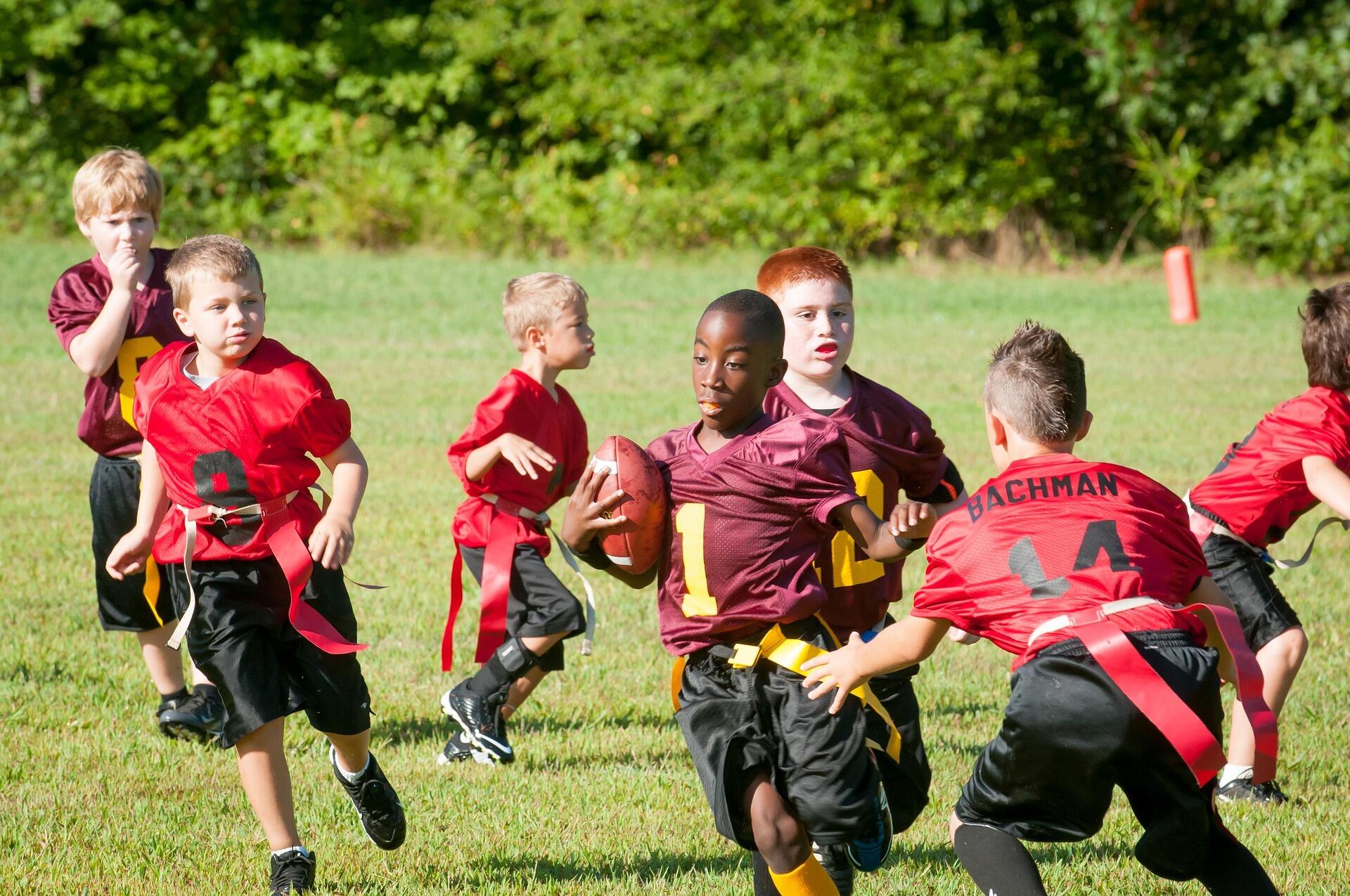
5 on 5 Flag Football Plays
With fewer players on the field, space becomes one of the offense's biggest advantages. The goal is often to isolate defenders and create simple passing opportunities rather than relying on complicated route combinations.
Play #1
Quick Slant
The quick slant is one of the easiest plays to execute consistently. The receiver takes a few steps forward before cutting sharply toward the middle of the field. If timed correctly, the quarterback releases the ball before the defender can react. This play works particularly well against defenders giving receivers extra cushion before the snap.
Play #2
Corner Route Combination
One receiver runs a short out route while another heads toward the back corner of the field. The underneath route encourages the defender to step forward, opening space behind them. The quarterback reads the defender's movement and throws to whichever receiver gains separation first.
Play #3
Mesh Concept
Two receivers cross through the middle of the field at slightly different depths. As defenders navigate around one another, one receiver usually finds open space. This play is especially useful against man coverage because defenders following individual assignments can become tangled during the crossing routes.
Play #4
Running Back Swing Pass
If league rules allow a running back, a swing pass offers a safe option when deeper routes are covered. The running back moves toward the sideline immediately after the snap, giving the quarterback an easy target. Once the catch is made, the player can use speed and open space to gain additional yards.
Are you looking for a flag football guideline for beginners?
7 on 7 Flag Football Plays
Seven-player teams have more receiving options and greater flexibility. Offensive coordinators can combine short, intermediate, and deep routes within the same play, making defenses defend every part of the field.
More players mean more receiving options and more opportunities to combine short, intermediate, and deep routes.
Play #1
Flood Concept
The flood play attacks one side of the field using three receivers at different depths. A short receiver runs into the flat, another breaks toward the sideline several yards deeper, while the third attacks downfield. The quarterback reads the defender responsible for that area and throws to the receiver left uncovered. Because defenders cannot realistically cover every level at once, the flood concept regularly creates high-percentage completions.
Play #2
Four Verticals
This classic passing play stretches the defense from front to back. Multiple receivers sprint vertically, forcing safeties to decide which routes deserve the most attention. If defenders hesitate or drift toward one receiver, another may gain enough separation for a long completion. Quarterbacks need patience on this play. Holding the ball for an extra second often allows the routes to develop properly.
Play #3
Levels Concept
Receivers attack the middle of the field at different depths. One player runs a shallow crossing route, another settles in the intermediate zone, while a third continues deeper. This layered approach gives the quarterback multiple options depending on how linebackers react. The levels concept is particularly effective against zone coverage because defenders must choose which receiver to protect.
Play #4
Post-Wheel Combination
The outside receiver begins by running toward the middle on a post route while a teammate starts underneath before turning sharply up the sideline on a wheel route. The post often draws the safety inside, allowing the wheel route to develop along the boundary for a potential big gain. Timing between the quarterback and wheel receiver is essential since the pass usually arrives before the receiver reaches full speed.
Flag Football Trick Plays
Trick plays should never replace a solid offensive system, but they can catch defenses off guard when used sparingly. The best trick plays look like ordinary plays until the final moment, encouraging defenders to commit before the offense changes direction. Ready to learn all about easy flag football plays?
You'll have the Double Pass, Reverse Sweep, Fake Screen and Go, Statue of Liberty, and Hook and Ladder.
Double Pass
The quarterback throws a short lateral to a receiver positioned behind the line of scrimmage. As defenders move toward the ball, that receiver launches a second forward pass to a teammate running deep. The initial lateral encourages defenders to attack aggressively, creating opportunities behind the coverage. Because timing is critical, teams should rehearse this play regularly before using it in a game.
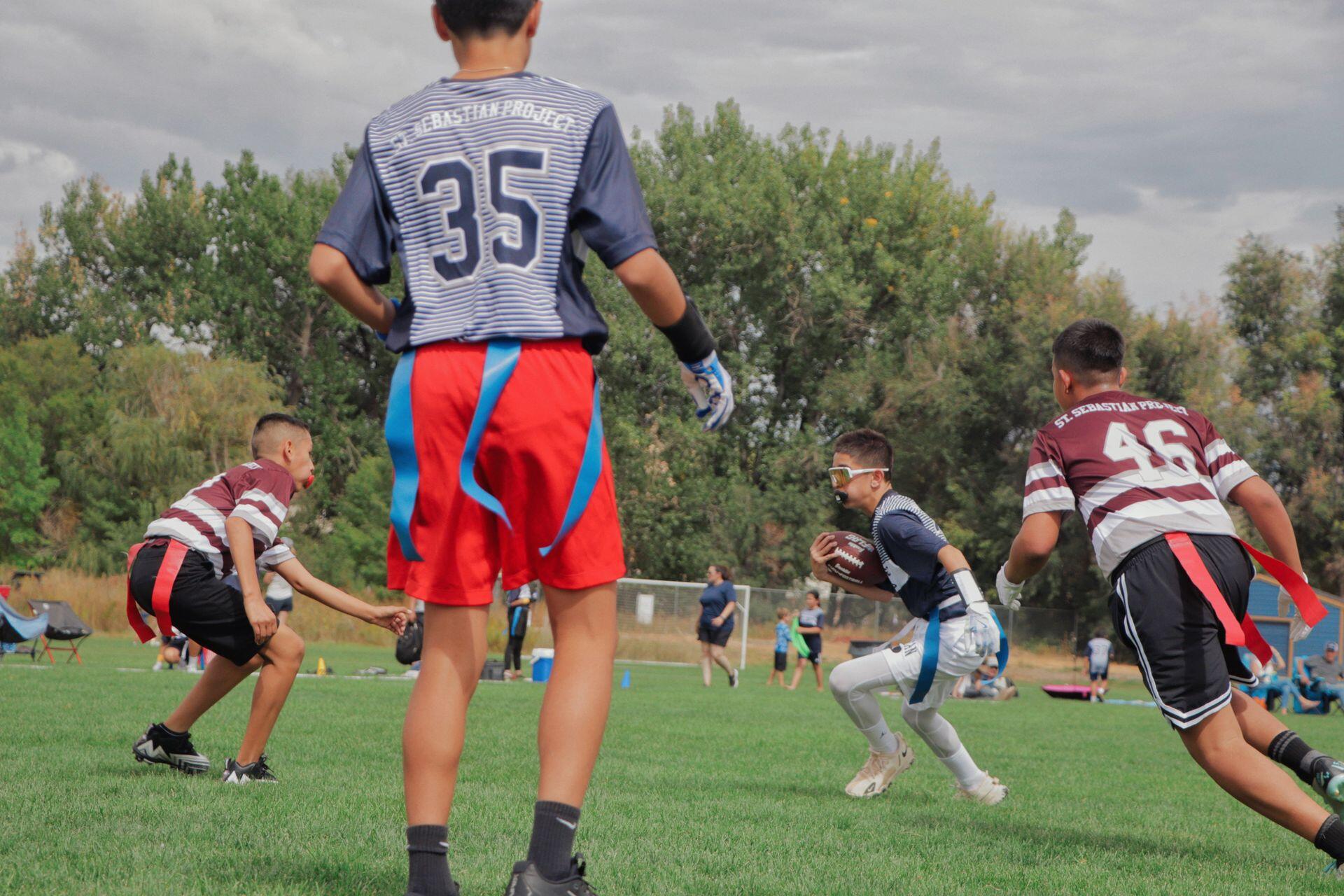
Trick plays are most effective when used sparingly and mixed into a reliable offensive system.
Reverse Sweep
The offense begins by sending one receiver across the formation before the snap. After the ball is snapped, the quarterback hands or laterals the ball to a teammate moving one direction, who immediately reverses it to the crossing receiver heading the opposite way. The sudden change in direction often leaves defenders pursuing the wrong player.
Teamwork makes the dream work, which is 1,000% true.
Vanita Krouch, quarterback for the U.S. Women’s National Flag Football Team.
Fake Screen and Go
Screen passes are common in flag football, making this variation particularly effective. A receiver briefly steps backward as though preparing to catch a screen pass. Defenders typically move forward to stop the short throw. Instead, the receiver accelerates downfield while the quarterback pumps the short pass before throwing deep. If the defense reacts aggressively to the fake screen, the receiver may find plenty of open space behind the secondary.
Curious to find out more about flag football rules and strategies?
Statue of Liberty
The quarterback pretends to throw the football while keeping possession hidden behind their back. Meanwhile, another player takes the ball and runs toward the opposite side of the field. Although this play requires excellent ball handling, it can completely fool defenders focused on the quarterback's throwing motion. Here is Tom Brady's fake Statue of Liberty play on YouTube!
Hook and Ladder
The quarterback completes a short pass to a receiver running a hook route. Rather than securing the ball and stopping, that receiver immediately laterals to a teammate sprinting past on the outside. Defenders often gather around the initial receiver, leaving the trailing player with a clear running lane after the lateral. The hook and ladder is most successful when every player understands the exact timing of the exchange. Winning at flag football isn't about memorizing dozens of complicated plays. Most successful teams rely on a small collection of formations and plays that every player understands thoroughly. Here is the play on YouTube!
Strong communication before the snap, disciplined route running, and dependable defensive positioning usually make a greater difference than trying to surprise opponents on every possession. Once those fundamentals become second nature, adding a few trick plays can provide another way to keep defenses guessing. As players gain experience, they'll also learn that no single play works every time. Reading the defense, adjusting to game situations, and trusting teammates often determine the outcome far more than the diagram drawn in the playbook. Practice each formation until players know their responsibilities without hesitation. What are the best flag football plays? A team that executes simple plays with precision will usually outperform one relying on complicated designs that break down under pressure. Any more questions? Contact a Superprof tutor today!
Summarise with AI:
Did you like this article? Leave a rating!

 Loading...